
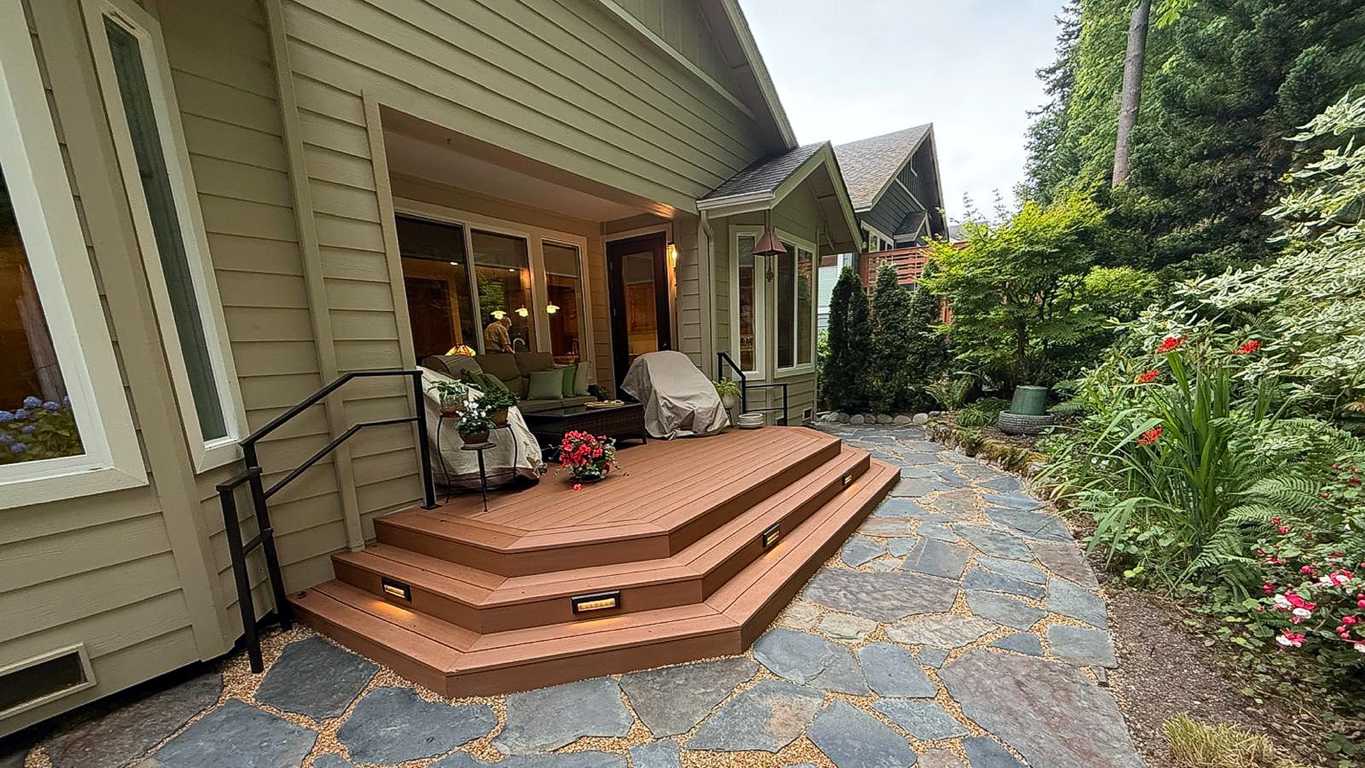
Composite vs. PVC vs. Cedar Decking
A homeowner’s guide to choosing a beautiful deck that fits your lifestyle
A great deck should feel like a natural extension of your home. The boards underfoot influence its appearance, maintenance, comfort, and long-term value. Composite, PVC, and cedar can each create an inviting outdoor space, but they achieve that result in different ways.
Composite offers a wood-inspired appearance with relatively little routine upkeep. PVC offers a fully synthetic board with strong moisture resistance. Cedar delivers the character of real wood and the flexibility to refresh its finish over time. The best choice starts with how you use your outdoor space and how much care you want to give it.
This guide compares the materials, explains their practical tradeoffs, and shows real project photographs supplied by the contractor. Materials are identified as provided; photographs include completed work, preparation, and construction stages.
The Differences at a Glance
Compare the specific board as well as the material category. Product construction, color, texture, and installation requirements can change the result.
| Consideration | Composite | PVC | Cedar wood |
|---|---|---|---|
| Composition | Wood fibers blended with plastic; many modern boards have a protective cap. | Fully synthetic PVC-based boards without a wood-fiber core. | Natural lumber with individual grain, knots, and color variation. |
| Appearance | Consistent wood-inspired grain and coordinated color choices. | Wood-inspired finishes and a consistent manufactured surface. | Authentic wood character; can be stained or allowed to weather. |
| Routine care | Cleaning; capped products generally need no routine staining or sealing. | Cleaning; generally no routine staining or sealing. | Cleaning and inspection; renew finish if preserving color. |
| Moisture | Cap and core formulation matter; follow exposure limits. | Strong moisture resistance in the board itself. | Needs drainage and drying; natural durability is not immunity to decay. |
| Upfront budget | Broad price range; often between basic wood and premium PVC. | Often higher, with overlap among product tiers. | Depends heavily on grade and lumber prices. |
| Surface repair | Deep damage may require replacing a board. | Deep damage may require replacing a board. | Can often be refinished; damaged boards may need replacement. |
A Deck Is More Than Its Surface
Deck boards are the walking surface, not a replacement for sound framing. Footings, posts, beams, joists, connections, flashing, stairs, and guards all affect performance. New boards should never hide decayed framing or unresolved water damage. Open board joints also mean the surface is not a waterproof roof over the space below.
Cedar: The Character of Real Wood
For homeowners who value natural grain and are comfortable caring for it
Cedar suits traditional homes, garden settings, cabins, and contemporary designs that use natural materials. Western red cedar is relatively light and easy to work with. Its heartwood has natural resistance to decay, but grade, heartwood content, moisture exposure, and detailing influence durability.
Advantages: Genuine wood grain, comfortable visual warmth, workable boards, and the ability to change or renew a finish. Cedar can coordinate beautifully with wood railings, privacy screens, and pergolas.
Tradeoffs: Cedar is a softer wood that can dent, scratch, check, or splinter as it ages. Sunlight changes its color, and maintaining a stained appearance requires periodic refinishing. Persistent moisture, poor airflow, and trapped debris can shorten its service life.
Where Cedar Makes Sense
Choose cedar when the real-wood appearance is central to the design and its future care fits your routine. It can work in sunny or rainy climates when detailed to drain and dry. For a shaded, damp yard, prioritize ventilation and debris removal rather than relying on cedar’s natural resistance alone.
Cedar Care and Installation
The finish is part of the long-term plan
To retain a chosen color, use a finish suitable for cedar decking and renew it according to its condition and the finish manufacturer’s instructions. Exposure and foot traffic determine the schedule; there is no reliable one-size-fits-all interval. Letting cedar weather to silver-gray reduces finish work, but does not eliminate cleaning, inspections, or repair.
Clean Gently and Inspect Regularly
Remove leaves and dirt from board joints, watch for slippery organic buildup, and use a cedar-compatible cleaning method. Aggressive pressure washing can damage wood fibers. A peeling film finish may need removal before recoating. Inspect fasteners and replace boards that are damaged beyond a sound repair.
How Cedar Boards Are Installed
Start with properly supported, level framing and a plan for drainage and airflow. Select board grade and thickness for the required span, and set spacing with the wood’s moisture condition in mind. Use corrosion-resistant fasteners compatible with both the cedar and the framing; predrilling near ends helps limit splitting. Prepare and finish the wood according to the selected coating system.
Composite: A Practical Balance
A wood-inspired surface with less finish maintenance
Composite decking blends wood fibers with plastic. Many modern products add a protective polymer cap, while uncapped boards behave differently. Compare cap coverage, approved exposure conditions, scratch resistance, cleaning requirements, and the actual color sample before selecting a product.
Advantages: A wide selection of colors and grain patterns, consistent dimensions, and no routine sanding, staining, or sealing for many capped products. It is a practical candidate for busy households and outdoor living areas where owners want predictable appearance with less finish work.
Tradeoffs: Higher initial cost than some wood options, potentially heavy boards, heat buildup in direct sun, and product-specific support requirements. Scratches, grease, and other stains still need attention. Deep surface damage cannot usually be sanded away like a wood finish; replacing a board may be the better repair.
Composite fits both contemporary and traditional homes. For a frequently used family deck, compare the texture, resistance to everyday wear, and the ease of replacing a board later. A covered deck still needs drainage, ventilation, and regular cleaning.
Composite Installation in Practice
Clean details begin below the boards
Check the framing before resurfacing. Correct joist spacing, flatness, blocking, board-end support, and stair support must follow the exact product’s installation guide. Diagonal layouts and stair treads may require different support spacing than straight deck boards. There is no universal spacing that suits every composite product.
Plan the layout before cutting, including picture-frame borders, joints, fascia, and transitions. Use approved screws or hidden fasteners, and provide the specified side and end gaps for drainage and temperature movement. Fascia may have its own fastening requirements. Deck boards should not be substituted for structural beams or posts.
Keep Routine Care Simple
Sweep away debris, clear board gaps, and wash with cleaners approved for the product. Follow the manufacturer’s limits for pressure washing and remove spills promptly. Low maintenance means less routine finishing work; the surrounding structure still needs inspection.
PVC: Strong Moisture Resistance
A fully synthetic option for a low-upkeep outdoor surface
PVC deck boards have no wood-fiber core. They are a strong candidate where resistance to moisture in the board and reduced finish maintenance are priorities. A shaded garden deck or a frequently splashed area may benefit, provided the selected product is approved for the intended use.
Advantages: Strong resistance to moisture and decay in the board itself, generally no routine staining or sealing, and often lighter handling than wood-plastic composite boards. Product lines offer different colors, textures, and trim options.
Tradeoffs: Often a premium initial price. Thermal expansion and contraction require careful detailing, and hot objects, scratching, or incompatible products can damage the surface. Low water absorption does not make the framing waterproof or guarantee a slip-free surface.
Installation uses product-approved fasteners, specified support spacing, and temperature-aware gaps and fastening details. Cleaning remains necessary: dirt and organic matter can support surface growth even on a synthetic board. Review compatibility before using rubber-backed mats, chemicals, or accessories.
Choosing for Your Home and Your Future
Heat and Barefoot Comfort
All decking can become hot in direct sunlight. Color, sun exposure, airflow, and the particular formulation matter. Some manufactured boards use technology intended to reduce heat buildup, but PVC is not automatically cooler than every composite. Examine samples outdoors where the deck will sit, consider shade, and compare product-specific test information. Wet traction also depends on texture, wear, and cleanliness; no deck surface is slip proof.
Longevity: Think in Decades, Not Guarantees
Quality composite and PVC boards can serve for decades when installed and maintained correctly. Some composite lines carry limited residential warranties of 25, 35, or 50 years; coverage varies by product.
Those terms do not promise the lifespan of the entire deck. Cedar can also provide long service with appropriate design and care, but weathering and board replacement are more closely tied to exposure and maintenance. Review exclusions, prorating, and any labor coverage before comparing warranties.
Compare the Full Cost of Ownership
An estimate should include demolition, framing repairs, foundations where needed, stairs, railings, fascia, fasteners, lighting, and labor. Premium cedar can overlap with manufactured-board pricing. Composite often offers a middle-ground budget, while PVC frequently costs more initially. For a fair comparison, add the cleaning, finish renewal, repair, and replacement work you expect over the years rather than comparing board prices alone.
Which Material Fits Your Priorities?
Choose cedar when authentic wood character and the ability to refinish are priorities, and you accept ongoing care. Consider capped composite when you want a wood-inspired look with less routine finish maintenance across a broad range of price points. Consider PVC when moisture resistance in the board and reduced upkeep justify the selected product’s price.
The same house can suit any of these materials. Climate, shade, deck height, daily use, design goals, and maintenance preferences are more useful decision factors than architectural style alone. Confirm permits and local requirements, and use a specifically approved product where additional fire or other performance rules apply.
Build an Outdoor Space That Works for You
A beautiful deck combines the right surface with sound construction and thoughtful details. Contact Vista Pro Remodeling at 747-298-4841 to discuss your outdoor remodeling goals and compare decking options for your home, budget, and lifestyle.
Citations
- Vista Pro Remodeling – Superior Deck Builders.